

When businesses invest in digital advertising, the default approach is often straightforward: create an ad, drive people to the website, and hope they convert.
On the surface, it makes sense. Your website is where people can learn more about your products or services, explore what you offer, and take the next step. And if you craft your website and your landing page right, you can increase the chances of converting visitors into actual customers.
But there’s a problem.
Every additional step you ask someone to take creates an opportunity for them to leave.
In many cases, the biggest barrier to conversion isn’t the ad itself. It’s the friction that comes after the click.
Why Website Traffic Is Often Treated as the Goal
Website traffic is one of the easiest marketing metrics to measure. Platforms like Meta and Google make it simple to track clicks, sessions, and page views, so it’s understandable that traffic often becomes a primary objective.
The challenge is that traffic alone doesn’t generate business outcomes.
A visitor who clicks an ad still needs to navigate your website, find the information they’re looking for, compare options, decide whether they’re interested, locate a contact form, and then take action.
At every stage of that journey, potential customers can drop off.
That’s why it’s important to ask a simple question:
Are we optimising for visits, or are we optimising for action?
The Problem With Adding Too Many Steps
Marketers often assume that more information helps people make decisions.
Sometimes that’s true.
But sometimes, providing too many choices, too many pages, or too many actions creates the opposite effect.
Imagine someone sees your ad while scrolling on their phone. They’re interested enough to click.
Now they’re asked to:
- Wait for a website to load
- Navigate through multiple pages
- Read extensive information
- Find the right contact option
- Complete a lengthy enquiry form
What started as a moment of interest can quickly become a task.
In an age where instant gratification is a staple, the more effort required, the more likely people are to abandon the process before completing it.
How Friction Impacts Conversion Rates
In marketing, friction refers to anything that makes it harder for someone to take the next step.
Common examples include:
- Long or complicated forms
- Too many clicks between interest and action
- Confusing navigation
- Slow-loading pages
- Excessive amounts of information
- Unclear calls to action
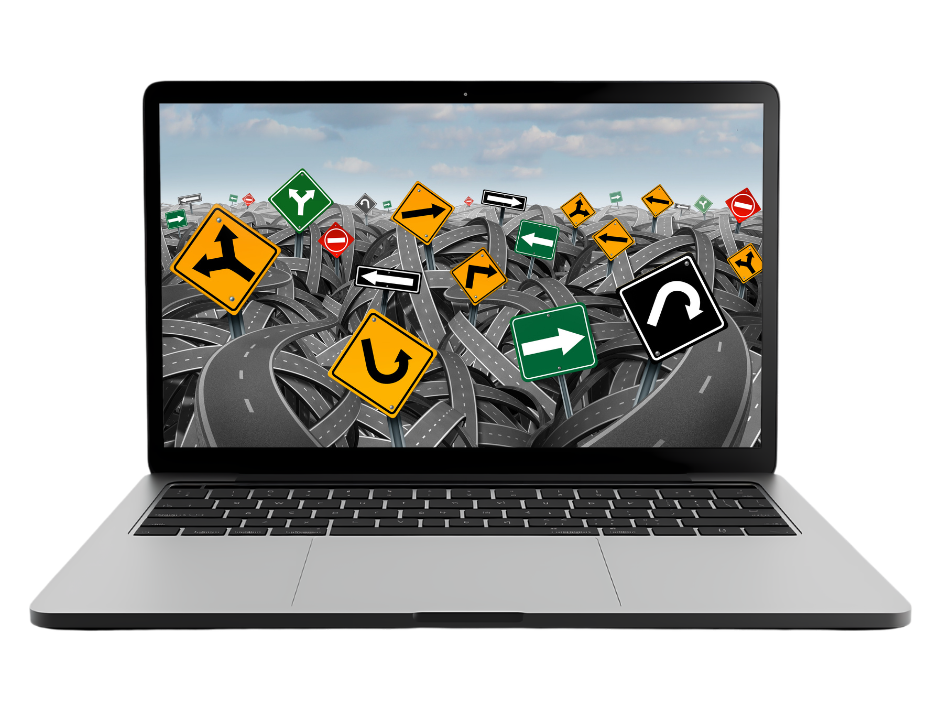
Even small barriers can have a significant impact on conversion rates.
That’s because most people don’t make decisions in a perfectly rational, linear way. They’re busy, distracted, and often interacting with content on mobile devices while doing other things.
Reducing friction isn’t about removing important information. It’s about making the desired action as easy and intuitive as possible.
When Lead Forms Make More Sense Than Landing Pages
This doesn’t mean websites are unnecessary. Your website remains one of your most important marketing assets. Here at Synthesis we have always said that your website is a hub, the essential connection between all your marketing efforts, and we stand by it. A good website should be planned to reduce these friction points as much as possible while still providing all the information that people are seeking.
However, there are situations where directing people straight to a lead form can be more effective than sending them to a landing page, especially when it involves people browsing social media on their phones.
Lead generation campaigns can work particularly well when:
- The audience is already familiar with the type of service being offered
- The goal is to generate enquiries rather than provide detailed information
- Time-sensitive opportunities exist
- Follow-up conversations are an important part of the sales process
- Mobile users make up a large proportion of your audience
Instead of asking people to research and initiate contact themselves, lead forms allow them to express interest immediately while their attention is still focused on your message.
This creates an opportunity for your team to continue the conversation through a more personal follow-up process.
A Real-World Example
Recently, we worked with a tertiary education provider that needed to increase enquiries within a short timeframe.
Historically, their campaigns directed users to the website, where prospective students were expected to research programmes, navigate multiple pages, and then decide whether to make contact.
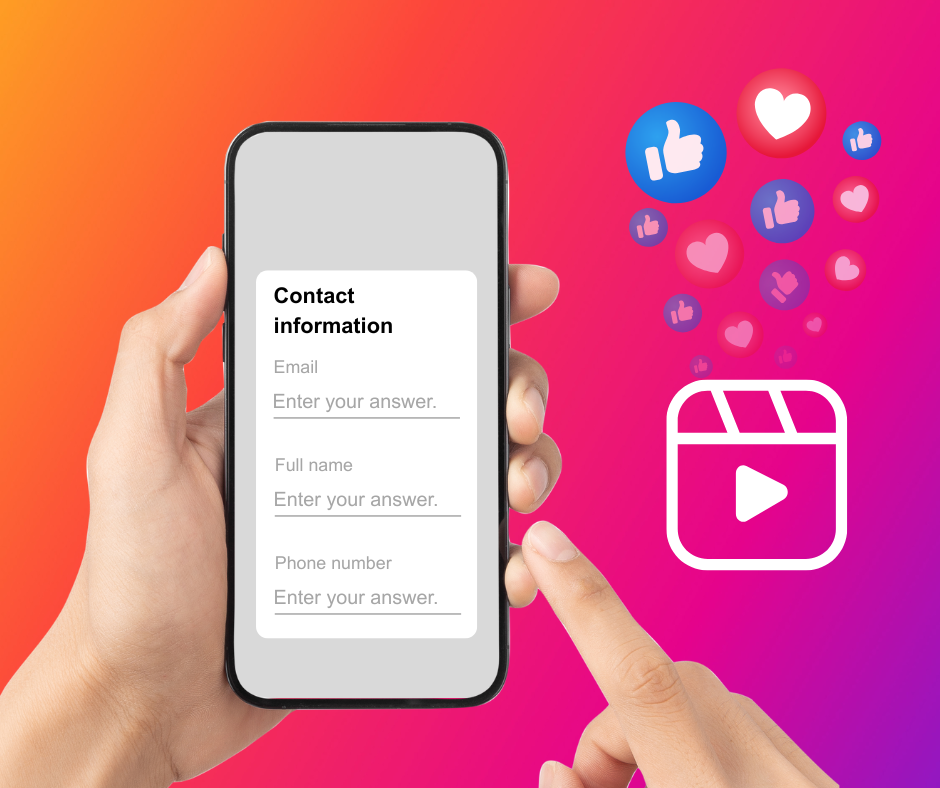
Instead, we tested a lead generation approach using short-form video content and a streamlined enquiry form.
The form was intentionally simple, collecting only the information needed for the admissions team to follow up directly with interested prospects.
By reducing the number of steps required to express interest, the campaign generated more than 100 leads at a cost of $3.37 per lead.
Perhaps more importantly, it gave the organisation a direct pipeline of prospective students they could engage with immediately, rather than relying on website visitors to continue their journey independently.
The biggest lesson wasn’t the platform or the creative.
It was that removing barriers made it easier for people to take the next step.
Key Takeaways
If you’re running digital campaigns and generating plenty of clicks but not enough enquiries, it may be worth looking beyond your creative and targeting.
Consider the experience after the click.
Ask yourself:
- How many steps are required before someone can express interest?
- Are we asking for more information than we actually need?
- Is our website helping people take action, or creating additional barriers?
- Would a lead generation campaign create a simpler path to conversion?
The most effective marketing isn’t always about driving more traffic.
Often, it’s about making it easier for the right people to say “yes”.
By reducing friction and simplifying the customer journey, businesses can often achieve better results without increasing their advertising spend.
Not sure whether a traffic campaign or lead generation campaign is right for your business? Get in touch with the Synthesis team for a conversation about your goals.